
Spam Detection in Email using Machine Learning
This is an
individual assignmentthat I did under the Machine Learning for Cyber Security module when I was in the 4th year 1st semester. This mini research paper is about the End-to-end implementation of Spam Detection in Email using Machine Learning, Python, Flask, Gunicorn, Scikit-Learn, and Logistic Regression on the Heroku cloud application platform.
 - |
- |
🏆 Top 2%
In today's world, email is used in almost every industry, from business to education. Emails can be categorized into two categories: ham and spam. Junk emails, also known as spam messages, are emails that have been designed to harm recipients by wasting their time, computing resources, and stealing their valuable information. It is estimated that spam emails are increasing at a rapid rate. One of the most important and prominent spam prevention techniques is filtering email. Naive Bayes, Decision Trees, Neural Networks, and Random Forests are among the methods used for this purpose by researchers. In this project, I examine the Logistic Regression machine learning model for spam filtering in email by categorizing messages into appropriate groups. This study also compares the techniques based on accuracy, precision, recall, etc. The accuracy level for this project was around 97%. Towards the end, these insights and future research directions, and challenges are outlined. Read more...👇
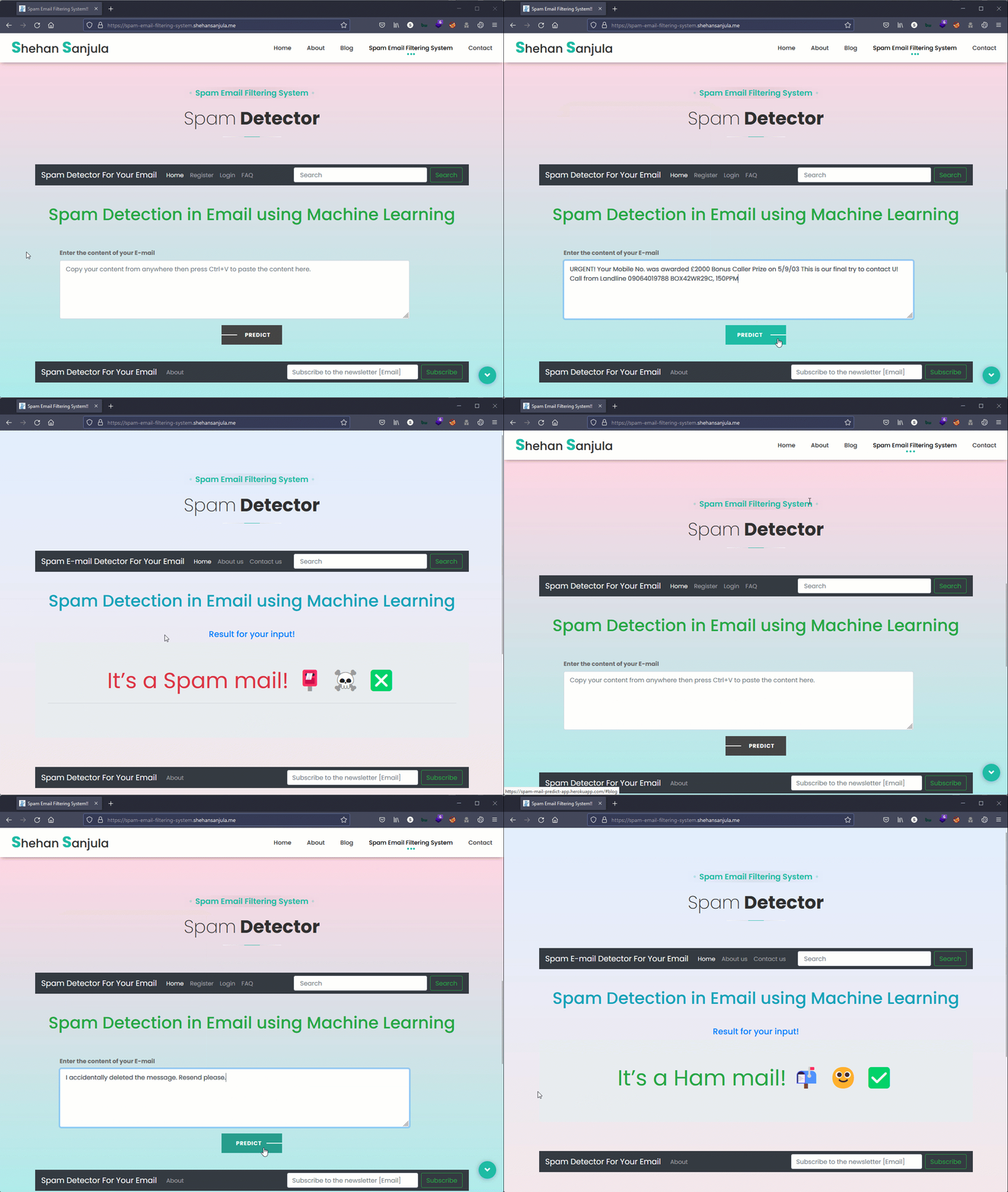
Spam Email Filtering System
As an information security analyst, email is a very important tool for communication. One important feature to ensure effective communication is spam filtering. How exactly does the spam filtering system work? Is it possible to build a more effective spam filtering system from scratch?
 Ranasinghe Arachchige Shehan Sanjula
Cloud Web Application
 ShehanSanjula